Ocular Surface Microenvironment and Tear Film Biomarkers

The ocular surface microenvironment is a complex system that includes the cornea, conjunctiva, eyelids, and tear film. This system works together to protect the eye and maintain vision. The tear film, composed of lipid, aqueous, and mucin layers, plays a crucial role in lubrication, nutrition, and defense against pathogens.

The tear film contains thousands of molecules, including over 1,800 proteins and peptides, lipids, and electrolytes, which reflect the health of the ocular surface. These molecules act as biomarkers, revealing inflammatory status, immune responses, and pathological changes, and provide a molecular basis for the diagnosis and treatment of ocular surface diseases.

Immune regulation in the eye

The ocular surface is constantly exposed to environmental allergens, pathogens, and pollutants, which can induce inflammation.

A robust immune response is essential to protect the ocular surface from infection. The cornea’s transparency is crucial for clear vision, and excessive inflammation can lead to immune-mediated damage to the ocular surface and corneal opacity, resulting in blurred vision.

The ocular surface represents a unique mucosal immune zone, characterized by anatomical, physiological, and immunological functions that together establish and maintain an immune-tolerant microenvironment vital for preserving normal vision and eye health.

The key components that constitute the unique immune physiology of the ocular surface include

  • The tear film
  • Corneal epithelial cells
  • Immune cells
  • Variety of soluble immunoregulatory factors.

Ocular Surface Immune Homeostasis

Under physiological conditions or homeostasis, the ocular surface immune system does not initiate an inflammatory immune response to self-tissues, commensal microbial antigens, or the numerous antigens persistently present in the environment.

In this state of equilibrium, the system remains ever-vigilant, poised to mount a robust defense against invading pathogens and to respond to environmental insults. During episodes of local inflammation and tissue damage, resident immune cells transition from a state of immune homeostasis—focused on tissue preservation—to a state of antimicrobial immunity or inflammation.

Subsequently, as acute inflammation is resolved, pathogens and apoptotic cells are cleared, and wounds heal, the immune system reverts to its state of homeostasis. If this delicate balance is disrupted, resulting in a loss of immune homeostasis, it can lead to diseases of the ocular surface.

The tear film and ocular surface Health

The tear film is a protective and lubricating fluid layer that covers the surface of the eye. It is composed of tears, secretions from the meibomian glands, and conjunctival secretions, typically considered to have three layers: 

  1. The outermost lipid layer, secreted by the meibomian glands; 
  2. The aqueous layer in the middle, produced by the main and accessory lacrimal glands, forms the bulk of the tear film and contains a plethora of substances such as lysozymes, proteins, inorganic salts, sugars, amino acids, and urea; 
  3. The innermost mucin layer, secreted by the goblet cells of the conjunctiva. 


Tears contain thousands of molecules, including proteins, peptides, lipids, electrolytes, and small metabolic compounds secreted by the main and accessory

– Lacrimal glands

– Meibomian glands

– Goblet cells

– Epithelial cells of the ocular surface.

The tear film prevents desiccation of the mucosal surface, offers protection against pathogens, and provides nutrients to maintain the health of the corneal and conjunctival epithelial cells.

Goblet cells, which secrete gel-forming mucins, are widely distributed across the mucosal surfaces of mammals, including the conjunctiva. On the ocular surface, goblet cells are the primary secretors of mucin in the conjunctival epithelium. During blinking, mucin helps to lubricate the ocular surface, stabilize the tear film, and acts as a physical barrier against pathogens and particles.

A deficiency or functional alteration in goblet cells can lead to reduced mucin secretion, associated with tear film instability and increased vulnerability of the ocular surface.

Studies indicate that patients with dry eye syndrome experience a loss of goblet cells and depletion of the mucin layer of the tear film.

The tear film plays a crucial role in regulating the immune homeostasis of the ocular surface. Alterations in the composition and concentration of tears, or issues in any layer of secretion, can destabilize the tear film and disrupt immune homeostasis.

Such disruption can lead to both physiological and pathological changes on the ocular surface, which in turn can alter the composition of tears, perpetuating a cycle of ongoing change.

i-ImmunDxâ„¢ Platform and POCT Products

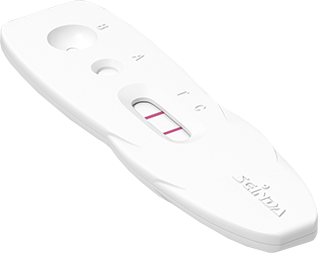
The i-ImmunDxâ„¢ platform, sample volume and delivers rapid results. It incorporates a micro-capillary fluid collector, Point-of-care testing (POCT) diagnostics, and an advanced analyzer. Targeting key biomarkers including

  • Lymphotoxin-α (LTα3, LTA)
  • Immunoglobulin E (IgE),
  • Matrix Metalloproteinase-9 (MMP-9)
  • Interleukin-6 (IL-6), and Interleukin-8 (IL-8). 

i-ImmunDxâ„¢ enhances clinical diagnostics, supports disease management, and advances scientific research into ocular conditions, contributing significantly to precision medicine.

Microcapillary Fluid Collector

The Disposable Micro-Capillary Fluid Collector (DMFC) is an innovative design for easy and precise collection of small fluid quantities.

The DMFC is suitable for the non-invasive collection of tear fluid from the human ocular surface and lower eyelid tear lake.  It can also be used to collect body fluids as sweat, saliva and extracorporeal urine, as well as other non-human fluids.

Can be used in conjunction with Seinda’s test kits and analyzer, or separately as a fluid collection device.

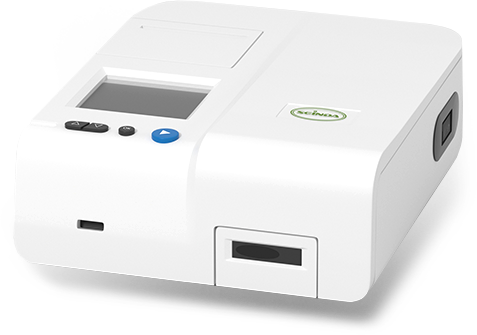
i-ImmunDxâ„¢ Analyser

The i-ImmunDxâ„¢ Analyzer is a highly sensitive reader, specifically designed for Seinda’s POCT strips. It features a fast, user-friendly interface, enabling operators to efficiently test patient samples and access stored results. Compact, lightweight, and portable, it’s ideal for various POCT settings including outpatient clinics, clinical laboratories, and inspection facilities. The analyzer offers two testing modes, providing flexibility to adapt to different workflow demands. It also supports automated results for qualitative, semi-quantitative, and quantitative in vitro immunoassays, enhancing testing efficiency and accuracy.


Accurate and repeatable – Fast, real time detection – Objective Quantitative Measurements –  Standardized Results

In vitro testing provides mechanistic information at the molecular level. POC tests enable precision medicine for improved clinical outcomes through:

  •  Discrimination of disease etiology
  • Selection of targeted treatment
  • Monitoring of disease status and treat efficacy

Exclusively intended for use in conjunction with Seinda’s fluid collectors and analyzer. 


Quantitative detection of lymphotoxin-alpha (LTα3, also abbreviated as LTA) in human tear samples assists in the clinical diagnosis of dry eye.

Research indicates that LTA concentrations in the tears of most dry eye patients are significantly lower than in individuals without dry eye, and these concentrations strongly correlate with the severity of various dry eye symptoms and signs. It is hypothesized that LTA expression on the ocular surface is linked to the proliferation of regulatory T cells and maintaining ocular surface homeostasis. Therefore, detecting LTA concentrations in tears can aid in the diagnosis of dry eye and in assessing its severity.


Immunoglobulin E (IgE) POCT quantitatively detects IgE in human tear samples and can assist in the clinical diagnosis of allergic conjunctivitis.

IgE plays a pivotal role in Type I hypersensitivity reactions. Exposure of the conjunctiva to environmental allergens stimulates IgE production, leading to hypersensitivity reactions. This allergen-IgE interaction on sensitized mast cells and basophils triggers cell degranulation, releasing inflammatory mediators and causing Type I allergic conjunctivitis.

Typically, tear IgE levels are low in the absence of disease, but in allergic conjunctivitis patients, they rise significantly. Therefore, measuring IgE concentrations in tears provides a rapid and accurate means to diagnose Type I allergic conjunctivitis.


The Matrix Metallopeptidase-9 (MMP-9) POCT quantitatively measures MMP-9 levels in human tear samples, aiding in monitoring ocular surface inflammation and diagnosing dry eye disease.

MMP-9 serves as a crucial biomarker for ocular surface inflammation. While normal individuals typically have low MMP-9 concentrations in their tears, these levels are significantly higher in patients with dry eye. Therefore, measuring tear MMP-9 concentrations is instrumental in assessing ocular surface inflammation, thereby facilitating the diagnosis and classification of dry eye disease.

To purchase or request more information, send us an email at sales@seindabio.com or send us a message.

Kim Tillinghast

CPFAâ„¢, Principal, Partner

Kim Tillinghast began her career in the banking industry in 1985. She graduated with a degree in Finance from West Texas State University in 1990 and has continued her education by earning her Series 24 General Securities Principal Exam and Certified Plan Fiduciary Advisor (CPFA™). Shortly thereafter she started her brokerage career at a traditional wirehouse in downtown Los Angeles, California in 1991. After relocating to Orange County, Kim became an independent financial advisor in May of 1993. She brings over 37 years in the banking and finance industry with experience ranging from designing, developing, employing and maintaining complex investment strategies, Pension Plans, Employee Stock Option Plans, Corporate Finance, Estate Planning and Transition. Outside of her career, she served as Co-Chair of the Dallas County Susan G. Komen Race for the Cure 2013 and 2014 and currently serves on the Board of the Tillinghast Society, Inc. With a deep love for animals, she continues to volunteer for multiple emergency animal response teams including Red Rover, HSUS, UAN, ASPCA and volunteers weekly at the Irving Animal Shelter. Kim also loves worldwide adventure travel and has many amazing experiences visiting almost half of the world’s countries and all seven continents, twice.

Karthik Muraliraj

CFP®, ChFC®, CLU®, RMA®, Partner

Karthik Muraliraj was raised in Fort Worth, Texas, and developed an interest in investing and economics at a young age. After graduating from the University of Texas at Austin with a Bachelor of Arts in Economics and a minor in Business, he started his career as a financial professional in 2008. Throughout his career, Karthik has continued to educate himself by gaining multiple designations. Since moving to Dallas, he has been an active member in the community—volunteering with organizations such as the network of Indian Professionals, Dallas Autumn Ball and Reading Partners. Karthik is an avid sports fan and enjoys supporting his alma mater as a proud member of the Texas Exes Dallas Chapter. In his free time, Karthik enjoys cooking, travel, fitness and spending time with this wife, son, dog, and cat.

Crystal Arredondo

MBA, CDFA®, CPFA™, Partner

Crystal Arredondo was born and raised in Germany. She moved to Texas following her parents’ decision to retire after serving an overseas career in the Armed Forces. Seeing firsthand the difficult transition to civilian life after retirement, Crystal obtained her MBA in Finance at the University of North Texas and began her career as a financial advisor. In 2009, she completed the Retirement Planning Specialist Program at the Wharton School of Business, University of Pennsylvania. In 2018, she earned her designation of Certified Divorce Financial Analyst® (CDFA®). In 2022, she earned the additional designation as a Certified Plan Fiduciary Advisor (CPFA™). As the daughter of an immigrant mother, she especially enjoys helping women and business owners make decisions that affect their financial independence. She served as the 2015-16 Chair for the National Association of Women Business Owners (NAWBO) and 2016-17 Chair for the NAWBO Institute of Entrepreneurial Development.

Philip Strunk

CFP®, CPA, Partner

Philip Strunk is a native of Houston, TX. Philip earned his Bachelor of Business Administration and Masters in Professional Accounting from the University of Texas at Austin’s McCombs School of Business. He earned his designation as Certified Public Accountant (CPA) in 2004 and CERTIFIED FINANCIAL PLANNER (TM) certification in 2010. Having started his career with Deloitte & Touche, LLP in 2005, Philip spent a year and a half in Deloitte’s Audit and Assurance Services group and provided a variety of financial services for a number of Fortune 500 companies. He decided in late 2006 that his talent and passion for investments were best suited for working with smaller groups and individuals. After obtaining the required securities registrations and insurance licenses, Philip became a financial advisor. The impact was plainly visible and more fulfilling. Philip serves as the Investment Director for MPACT.

John C. Farris

CAP®, CFS®, Partner

John C. Farris is a founding partner and has more than forty years in both public and private business serving in a variety of management and leadership capacities. John completed the Retirement Planning Specialist Program at the Wharton School of Business at the University of Pennsylvania earning the Retirement Planning Specialist designation. John and his family have a history of philanthropic giving through numerous non-profit organizations. John recently completed his designation as a Chartered Advisor in Philanthropy® (CAP®). He is also a member of The International Association of Advisors in Philanthropy. His primary goal is to help people give intelligently with love and thereby experience the true joy of helping others. John lives in Park Cities and has served on the Public Works Advisory Council, as finance director of the BSA West Park District, the BSA Troop 82 Executive Board, and as a BSA Assistant Scoutmaster for Troop 82, Dallas, Texas.